

Couples Therapy Season 4.5
No, don’t just sit there

Dr. Orna Guralnik, best dressed therapist.
Every couple comes into Orna’s office with a problem.
Nick & Katherine are both avoidants. Mondo & Kyle can’t agree on whether to open their relationship. Rod & Alison bicker relentlessly, to the point that I was turning down the volume on my TV. Boris & Jessica can’t decide where to live.
Three couples work through it. One doesn’t.
I’d argue conflict resolution doesn’t have anything to do with the actual conflict. It has to do with the partners’ attitudes toward each other. Do they like each other? Do they want to work it out?
Or is the conflict—and the story surrounding it—serving one of the partners in some way?
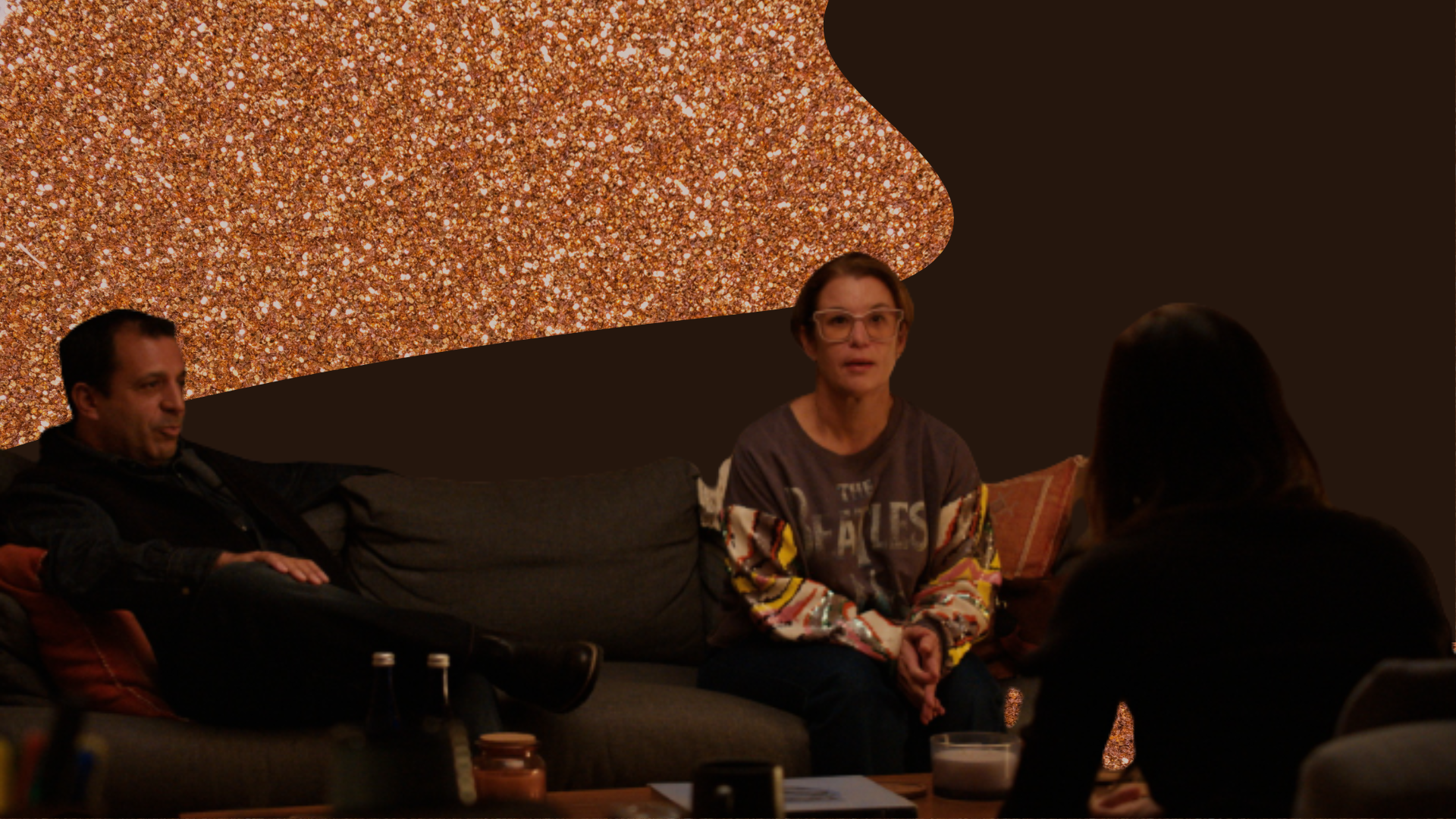
Rod & Alison. Even their positions on Orna’s couch reflect their dynamic—Rod slouched, Alison straight up.
He’s Trying
I used to be a teacher. When I taught kids how to read, I was surprised that their progress wasn’t incremental. They don’t learn 5% more everyday until they finally read. We try and try and try…and there’s nothing. No progress, for a long time. Then, one day, boom, the kid is reading. A breakthrough comes seemingly out of nowhere.
But it’s not out of nowhere. It’s after a lot of hard work.
It’s the same with three of the four couples. At some point in the season, after a lot of hard work—but seemingly out of nowhere—they turn a corner. Their problems aren’t gone, but their ugly feelings are. They treat each other with warmth. It’s not so high stakes anymore. Even as a viewer, I could feel the energy dissipate in therapist’s office.
Alison cuts herself off mid-rant. Seriously! She listens to Rod. She admits her attack the night prior, renewed in that day’s session, came from embarrassment at her own behavior, not frustration at him. Her retreat lays the path for Rod to look at his role in their cycle, too. They both take responsibility.
Katherine helps Nick recount a traumatic event from his past. Later, Nick helps Katherine through remembering a traumatic event, too. After so much avoidance, they are there for each other. Their mutual empathy and patience is heartwarming. I could feel their love.
Mondo and Kyle dig below the surface-level issue of monogamy. Really, they both feel excluded—Mondo because he’s Hispanic and Kyle is white, Kyle because he’s deaf and Mondo is hearing. So they shift their focus to including the other person. They recount their perspectives honestly, while the other listens without defense. Not easy to do! It was encouraging to watch a them put their own feelings aside, listen to each other, then come together on a path forward.
But what if that watershed moment never arrives?

Nick & Katherine
I Don’t Like How I Was Portrayed
I think to do the work in a relationship, you sometimes have to put truth to the side for a moment. Sometimes, it’s about story.
Boris and Jessica’s surface issue is “where should we live.” But there’s a story below this.
Jessica tells the couple’s story in a session. She says Boris is a little prince who had to grow up too soon (her words). He grew up into a king who fell in love with a blonde girl, then found adulthood to be as confining as princehood (again, her words).

Boris & Jessica
To me, it sounds like Boris feels a lot of pain inside. He expects Jessica to alleviate that pain. In other words, to exist for him.
He expects her to live where he wants to live, buy groceries how he wants groceries. If she doesn’t, he criticizes her pretty harshly. If she protests, he stomps her out. If she apologizes, he stomps her out. He listens to her pleading with a sort of pleasure that made me uncomfortable.
Boris’ focus is on story, not truth. For example, he complains about how he was portrayed in the first session—that he sounded like a monster. He doesn’t wonder if he treated Jessica like a monster. He cares if he is portrayed like a monster.
Boris and Jessica stop therapy after a few sessions. Orna holds Boris accountable, which he will not tolerate.
But—they come back one more time.

Mondo & Kyle
Happily Ever After
Boris and Jessica frame this last therapy session as a victory lap.
Boris says how their problems were really bad, but then he planned a special birthday weekend for Jessica. This is his story—he’s the knight in shining armor saving the marriage.
Really, Jessica told Boris to move out. I think Boris had his “oh shit” moment. He realized he pushed Jessica too far. So he threw a last-ditch-hail-Mary, took Jessica out in the city they live (three months of planning-my-ass), and told her all the things she wanted to hear.
Does this mean his contempt before was a choice? Or was it really due to depression? I don’t know. All I know is he changed his behavior quickly.
Maybe Jessica was relieved, maybe she believed him, maybe the kindness and attention felt really good. Whatever it was, Jessica takes him back.
Was this a breakthrough? Did Boris change for good? Or is this the uptick in their cycle?
I think that Boris blames Jessica for his pain because it creates a story that serves him. He is good, but more importantly, he is a victim. If his internal pain isn’t his responsibility, it means he doesn’t have to do anything to fix it.
When you’re unhappy, it’s really hard to do the work to make yourself feel better. It’s easy to blame someone else.
I think once this high fades, and his internal pain creeps in again, Boris will be faced with a choice: do the work to change, or blame Jessica again.
But who knows. Maybe Boris and Jessica figured it out. Maybe this is just my story, projected onto them.
