

Taylor Swift’s evermore: Part 1
For some, their favorite album. For others, a “clunker.”

“Good thing my daddy made me get a boating license when I was 15.” - no body, no crime
The love stories in Swift’s last album folklore were big and ended with big betrayal. The love stories of evermore are still dealing with the aftershock, but more time has passed.
Swift is standing in a forest on the cover of folklore. For evermore, she’s in a field looking at the forest. She’s out of it.
Equilibrium
Swift’s evolving perspective lands on the idea of equilibrium. Love was flying so high, maybe it was inevitable that it would crash just as hard.
Take for example the narrator of it’s time to go. She was hit with three betrayals:
First, her partner cheats, “he’s insisting that friends look at each other like that.” Then personal betrayal, “she was not in fact what she seemed, not a twin from your dreams, she’s a crook who was caught.” Finally, business betrayal, “Fifteen years…he gave me nothing at all…he’s got my past frozen behind glass.” This sounds like a reference to Swift losing the rights to her first six studio albums, which she recorded over “fifteen years.”
But she’s not reeling like the narrator of this is me trying or enraged like mad woman or fighting back like my tears ricochet (all songs from folklore). She feels certain that “walking out is the one thing that will find you the right thing.” She lets go.
Maybe, her new growth will be just as powerful as the heartache it was born from. Equal but opposite.

“Honey, when I’m above the trees, I see this for what it is” - happiness
High & Low
The idea of ‘equal and opposite’ continues in the song gold rush. Memories of a “beautiful” ex-lover tempt the song’s narrator: “eyes like sinking ships on waters so inviting.” The water looks inviting, but those ships are sinking for a reason. Once again, deception finds its way into a break-up.
The narrator resists indulging in daydreams of this past relationship (“I almost jump in”) because the high and low, or “gold rush” and “bone crush,” are indistinguishable: “I don’t like that falling feels like flying til the bone crush.” But this relationship sounds like it was really flying! Here are some lines: “gleaming, twinkling,” “red flush,” “rose blush” “slow motion double vision.”
Indulging in a daydream of the past also means recalling the ensuing nightmare—the equal, but opposite side of those euphoric memories.

“And then it fades into the gray of my day old tea" - gold rush
Frozen
Problems arise in evermore when characters don’t let go. Heartbreak freezes them in time.
For example, in right where you left me, the narrator’s boyfriend breaks the news to her that he met someone else. She stays in that moment forever.
In the title song evermore, the narrator is stuck reliving past memories, while struggling with the classic betrayal/break-up combo we saw in folklore.
In tis the damn season, starlet Dorothea visits home and begs an ex to be hers “for the weekend.” She moved away, but her heart never really moved on.
In all these stories, “time went on for everybody else” (right where). But for these three characters, the persistence of their heartbreak means lack of forward motion: “all [time] does is pause on the very moment all was lost” and “I stayed there” (right where, evermore). The weekend Dorothea spends with her ex seems to last forever and mean everything to her. But when they’re apart, “time flies messy as the mud on your truck tires” (damn season).
Time only moves forward in evermore when characters let their heartbreak die. Then, something new can grow.
But how can you let go when you’re decimated by heartbreak?

"In from the snow, your touch brought forth an incandescent glow" - ivy
Winter Before Spring
The narrator of it’s time to go discusses just that. She says “you know when it’s time to go” when you feel “that old familiar body ache.”
In the song evermore, the curse is also the cure. Memories of her ex-lover finally allow her to let go: “And when I was shipwrecked / I thought of you / in the cracks of light / I dreamed of you / it was real enough / to get me through / I swear / you were there.” Relief finally arrives after this emotional low point: “this pain wouldn’t be evermore.”
Death precedes rebirth in evermore, just like the seasons.
The shipwreck in evermore sounds like death “staring out an open window catching my death.” Then, she mentions “floors of a cabin creaking under my step.” “Cabin” here could be the cabin of a boat. Maybe the ship didn’t sink after all.
Death precedes rebirth in evermore, just like the seasons. There is no spring without winter.
Who knew the hack for not staying…frozen…in heartbreak would be to….let it go?

“A tiny screen’s the only place I see you now.” - dorothea
Swift compares the album evermore to winter: “wintertime myths and fireside tales of love lost and found” (from the Era’s Tour book). The album was released in December. Maybe this was her ‘era’ of emotional death and release, before a spring of growth.
Now…enter a couple of witchy women with a bit too much power and something to avenge. Can they slip through time and space?
Check out Part 2 to find out.
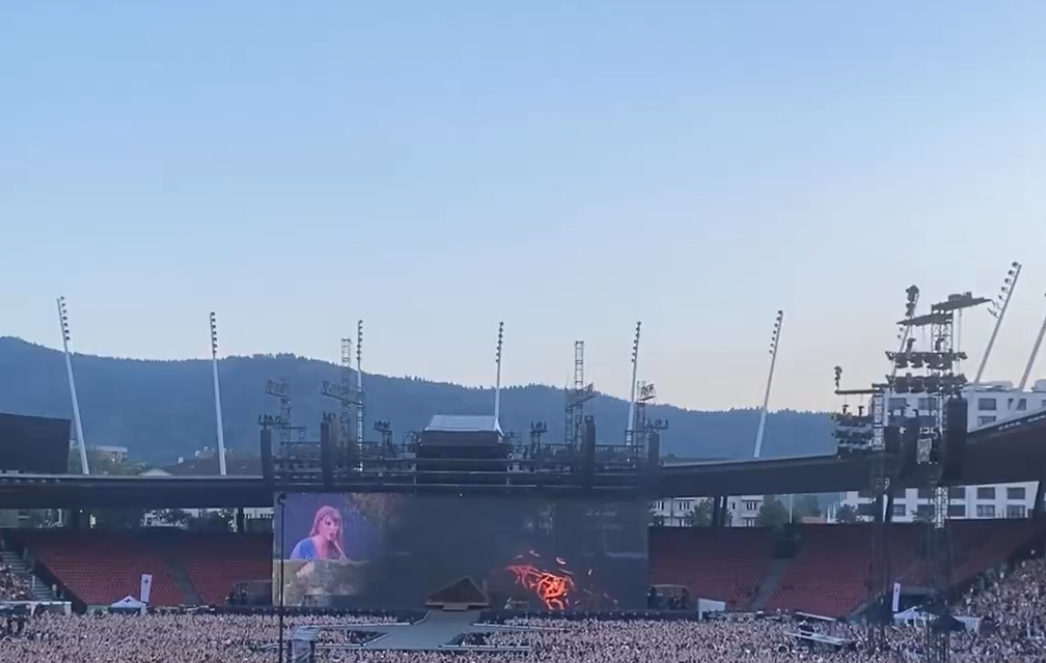
champagne problems live in Zurich.
I am terrible at taking videos but here is what I got….
Up Next: Taylor Swift’s evermore: Part 2
Read Part 3 here.
All Taylor Swift articles
All music articles
